Tiny Eden Getting Started
A first-hour plan for the apartment garden, from the seed packet to your first cooked plate.
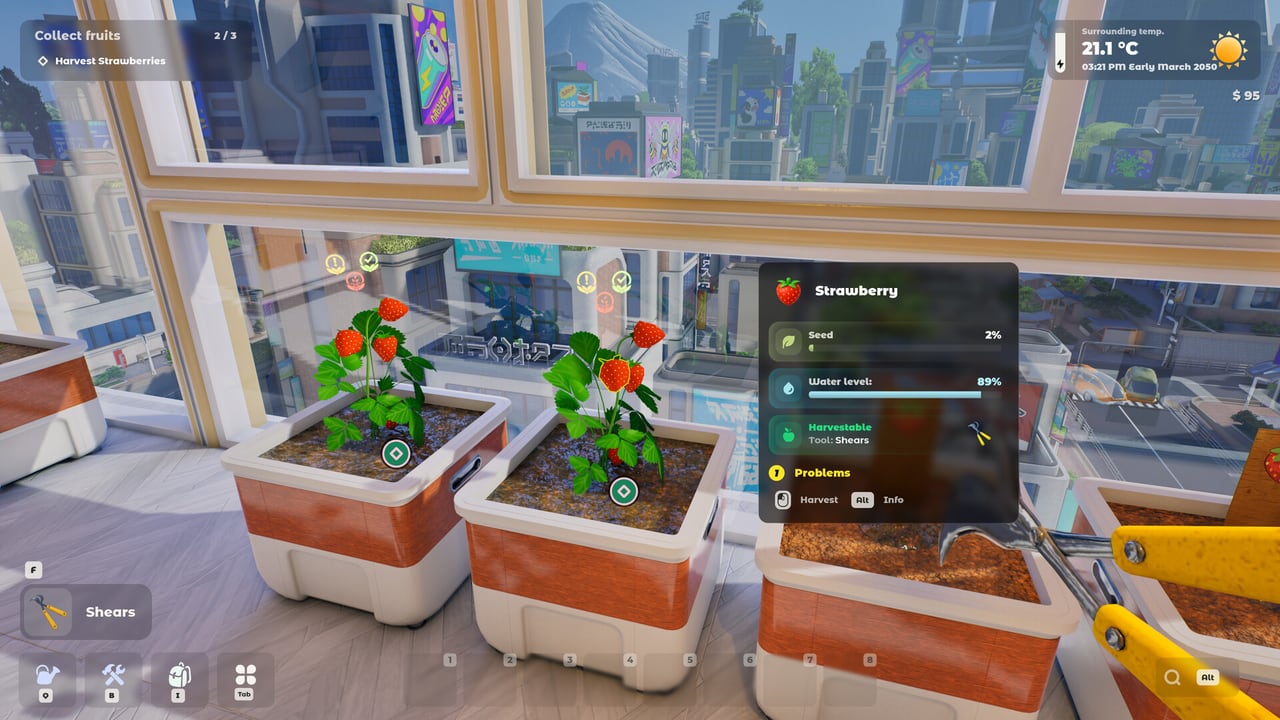
Tiny Eden begins with a grey apartment and a packet of seeds that should not have been yours. That is the whole pitch. Bajka Games built a first-person indoor farm sim because the team could not find one set inside a city flat. Digital Vortex Entertainment publishes it on Steam for PC on 7 September 2026 as a complete 1.0 release. There is no Early Access, no co-op, and no countryside map hiding behind the elevator.
This page is the on-ramp. Use it before you dump compost into a decorative bowl. Pair it with controls if the tutorial asks you to open a menu you cannot see, and with the demo guide if you want to know how much of the story the free build actually contains.
What kind of game this is
The official FAQ calls Tiny Eden an economic sim, a farming sim, and a life sim. In practice it is closer to a tactile indoor gardening sandbox than to Stardew Valley. There are no festivals, no combat, and no romance meters. You live in the apartment. You mix soil. You water. You cook. Neighbours buy the food. Money buys better planters, seeds, tools, and later drones.
The studio grew the plants in real Warsaw apartments before coding them. That is why onions can take a long in-game stretch if the room is too cold, and why tomatoes demand a transplant chain instead of a single “grow” timer. Treat the how to grow page as required reading, not optional flavour.
First hour checklist
- Wishlist the 1.0 build on Steam and install the demo if you have not already.
- Complete the in-game tutorial. A later playtest added a clearer intro; older City Garden Harvest footage will look messier than what you have now.
- Learn controls: WASD to walk, mouse to look, Q/E to rotate placed pots, right click to grab in many demo builds, left click to plant or water.
- Fill the first pot to the soil recipe on the plant card. Early plants often want a simple compost and sand mix. The soil NPK tool lists what those numbers mean.
- Put the pot where the plant wants light. Windowsills are not decoration; they are the first farm tiles.
- Water, wait, and do not over-feed. Nitrogen, phosphorus, and potassium are tracked per pot. Too much fertiliser kills the crop.
- Harvest into the kitchen. Version 1.0 sells cooked dishes, not raw crates. See how to cook.
- Sleep or let the 60:1 clock run. There is no fail state for wasting a day, but dry plants still wilt.
The seed packet and the first plants
The story opens when a packet arrives at the door. Strawberries, tomatoes, peas, herbs, onions, peppers, basil, and flowers show up across press kits and demo reports. The base game targets around 40 species, including microgreens, root vegetables, flowers, and berry bushes. None of them are gated behind a “beat the last crop” lock, but the shop can hide seeds until your reputation with the building improves.
If a tomato disappears after a few days, it almost certainly needed a larger pot. Community growers documented a 0.5 L → 3 L → 16 L path. The pot size chart exists so you do not have to rediscover that the hard way. Read the plant info panel; it tells you when to transplant.
Money, work, and the shop
Older City Garden Harvest demos included a remote coding job that paid almost nothing. Later Tiny Eden builds lean harder on cooking, parcel boxes, and generated orders from day two. Do not plan a launch economy around the old 9-to-5 minigame until you see it in 1.0. Sell plates, take orders from the PC or the parcel box, and reinvest.
Buy soil components in bulk when the shop UI shows a discount row. Buy pots that match root depth, not just the colour of your sofa. Furniture matters for light and temperature as much as for screenshots. The cat needs a bed too; the official account treats “rescue the cat” as a real objective, not a meme.
What Tiny Eden is not
It is not a Roblox experience. It is not a mobile idle garden. It is not a multiplayer farm. Linux and SteamOS are listed on the Steam page with Vulkan 1.3 mesh-shader requirements; the system requirements page copies those numbers. The demo does not officially support Steam Deck even though the FAQ says the full game will.
If you came here from Stardew comparisons, keep the plant tier list open. Value in Tiny Eden is “fits the apartment and the recipe book,” not “gold per day on a 5x5 plot.”
After the first harvest
Once a salad or baked dish leaves the kitchen, start thinking about layout. Unlocking rooms, balconies, and the rooftop greenhouse is the long game. Drones arrive as late automation: they can fill pots, plant, water, pull weeds, harvest, and remove dead plants if the station is stocked. That belongs on how to expand, not in your first evening.
Keep the release date page handy for the 7 September unlock and the $14.99 price. The roadmap is where mushrooms, vines, trees, and DLC live. Official channels are collected on the links hub.
Play the demo, take notes on which plants you actually enjoy tending, and come back to this wiki when a quest text is vaguer than the soil gauge.
Frequently Asked Questions
Quick answers to the most common Tiny Eden questions.
Has Tiny Eden 1.0 shipped yet?
The full 1.0 build launches on Steam on 7 September 2026. A free demo can be downloaded from the store page before that date.
Do I need farming knowledge?
No, but real-world habits help. The game shows soil ratios on the pot. The soil NPK tool explains N, P, and K in plain language.
Where did the name City Garden Harvest go?
That was the working title. The project rebranded to Tiny Eden in April 2026. Demo videos under the old name are the same game.