How to Grow Plants in Tiny Eden
Soil chemistry, pot size, light, and the tomato transplant chain that eats new gardens.
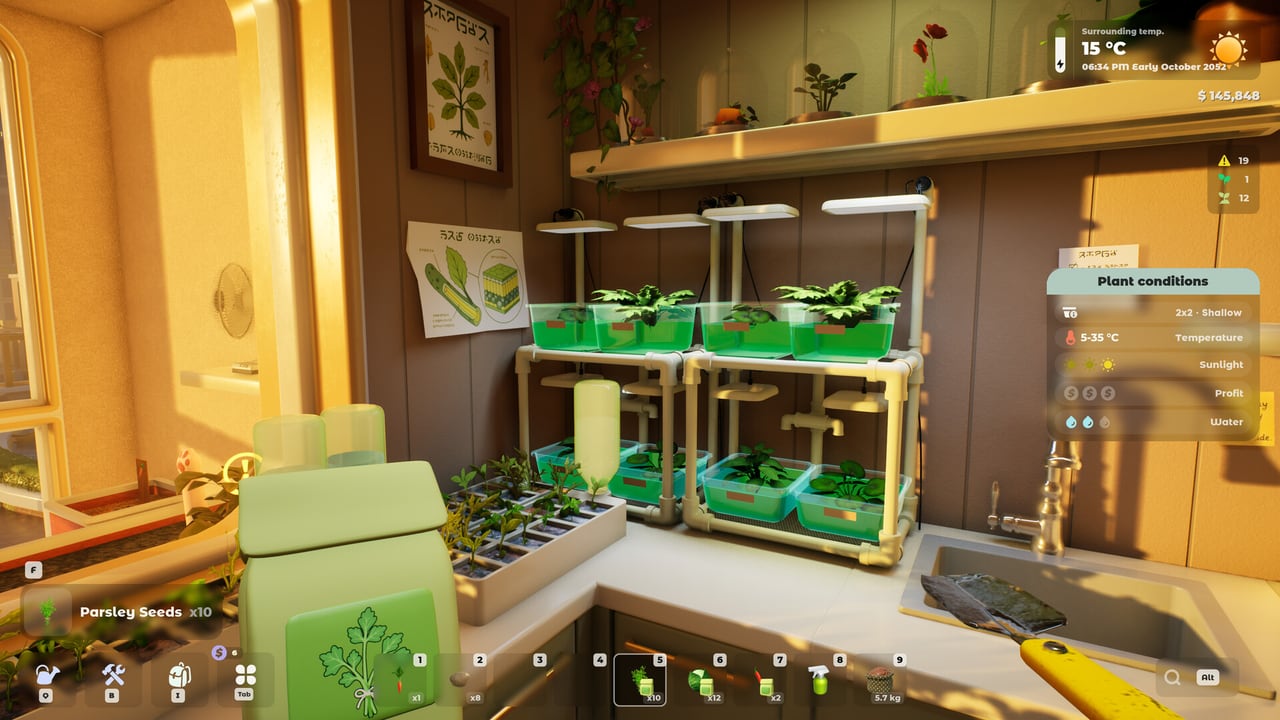
Growing in Tiny Eden is not a watering-can minigame. Each plant is a container problem: the right pot, the right mix, the right shelf, then patience. The official FAQ and Dev Log #5 are blunt about this. Soil is not one brown resource. It is compost, sand, clay, perlite, coco coir, peat, and a seventh “secret” ingredient, with NPK, aeration, drainage, retention, and acidity on top.
If you skipped the onboarding, go back to Getting Started. Keep the soil NPK tool and pot size chart open while you read.
Four growth stages
Plants move through four named stages:
- Sprout — germination. Easy, which is why real gardeners start seeds indoors.
- Seedling — still fragile. This is when tomatoes vanish if they stay in a 0.5 L cup.
- Mature — harvest and maintain. Berries and cut-and-come-again herbs live here.
- Wilting — replace the plant, or leave it if you are baiting pollinators.
Early stages want weeding, disease care, and stable conditions. Mature plants want harvests and nutrients. Wilting is a signal, not always a failure.
Mix the soil before the seed
When you fill a pot, the UI shows a recipe. An early plant might ask for compost 0/6 and sand 0/4. Compost feeds. Sand drains. Clay holds water and minerals. Later species add clay and the specialty media. Fill to the numbers, then stop. Extra “just in case” material changes aeration and can drown roots.
NPK is separate from the mix:
- N (nitrogen) — leaves and chlorophyll.
- P (phosphorus) — roots.
- K (potassium) — water pressure and cell health.
Each plant eats these at a different rate. The game will notify you when a pot is low. Fertiliser comes as pellets, liquid, or aerosol. Over-feeding kills the plant. That is not a slapstick fail; it is the same rule as a real bottle of 5-7-5. Use the soil NPK tool to remember which number does what before you spray.
Light, heat, and where the pot sits
Light depends on placement. Shading nets and grow lights exist so a back room can still grow. Temperature depends on location and season: balconies are warmer than rooftops and colder than indoor rooms. Heaters and air conditioners are the later tools. If your onions stall for months, the room is probably too cold — a tester planted in May and finished in October without enough heat, which matches real onions.
Put sun lovers on the sill. Put heat-shy greens deeper in the apartment. The how to expand page is about unlocking those extra microclimates, not just square metres.
Transplant or lose the plant
Container size is root architecture. A pot that is too shallow stunts a deep-rooted crop no matter how perfect the compost is. Community tomato growers needed three pots: 0.5 L, then 3 L, then 16 L. Another player succeeded with small → 5 L → 16 L. Read the plant info; it tells you when to move and to what volume. The pot size chart stores those steps so you are not scrolling a two-year-old Steam thread during a live plant.
If a seedling despawns after three or four days, assume a missed transplant before you assume a demo cap. Developers have said every listed demo plant should be growable.
Companion planting that is not a sticker chart
Tiny Eden models companions through roots, not a cute heart icon.
- Tomato + basil — good. Tomatoes root deep, basil stays shallow, so they do not fight for the same layer. Basil also helps with pests.
- Cabbage + tomato — bad. Cabbage strips nutrients tomatoes need. Both harvests suffer.
A full pairing walkthrough lives on companion planting. Pair this with the plant tier list when you plan a windowsill. A high-value tomato is worthless in a shared 3 L pot with a cabbage.
Daily care loop
Water to the plant’s need, not to 100 percent for every species. Pull weeds. Watch for soil-borne disease and use the sprayer. Attract pollinators when fruiting plants stall. Beneficial insects are in the FAQ for a reason. Drones can later take watering, weeding, harvesting, and dead-plant removal if the station has soil and seeds — that is late-game, covered under how to expand.
Genetics exist as a harvest choice: cash versus research. Research can roll new varieties (frost-resistant purple tomatoes in one run, giant fragile sour ones in another). It is luckier than real breeding. Do not stall your first week waiting for a purple mutation.
Species you will actually see
Press and FAQ names include tomatoes, strawberries, peas, herbs, onions, peppers, basil, cabbage, cucumber, watermelon, corn, chili, cilantro, flowers, microgreens, root vegetables, and berry bushes. About 40 species at 1.0. Future plans mention mushrooms, vines, and trees if the launch holds. None are locked behind beating a previous plant, but reputation can gate the seed shop.
Grow one reliable herb for the kitchen and one fruiting crop for recipes. Then open how to cook so the harvest has somewhere to go. Version 1.0 sells cooked dishes; a raw tomato crate is not the payday.
Practice all of this in the demo while pots are cheap. Launch week is a bad time to learn that sand was the missing quarter of the mix.
Frequently Asked Questions
Quick answers to the most common Tiny Eden questions.
Why do my Tiny Eden tomatoes disappear?
They usually need a bigger pot. Check plant info and follow a 0.5 L → 3 L → 16 L (or 5 L) chain. See the pot size chart.
Can I over-fertilise?
Yes. Too much NPK kills the plant. Wait for the low-nutrient notification, then add a modest dose.
How many plants are in Tiny Eden?
The FAQ says around 40 species in the base game, including microgreens, roots, flowers, and berry bushes.